
November 18, 2026
Quick answer: Granulation tissue is the new, pink or red tissue that forms as an open wound heals. It contains small blood vessels, connective tissue, and cells that help rebuild damaged areas. Healthy granulation tissue supports wound closure by filling the wound and providing a foundation for new skin to grow. However, excessive granulation tissue or unusual changes in appearance may require medical attention.
A healing wound can look different from one day to the next. You might notice moist, pink or red tissue filling the injured area. This is often granulation tissue, an important part of the body’s process of repairing damaged skin.
Understanding what this tissue does can help you follow your recovery. At Gladiator Therapeutics, we develop far infrared therapy technology for use alongside wound care. Knowing how wound healing works is a useful starting point when discussing recovery options with your healthcare provider.
What Is Granulation Tissue?
Granulation tissue is new connective tissue containing tiny blood vessels, repair cells, and a supporting framework of proteins. It develops as the body rebuilds an injured area, especially in open wounds that need to fill in before skin can cover them.
Its name comes from its slightly grainy or bumpy appearance. Healthy granulation tissue generally looks pink or red and moist. The color comes largely from its developing blood supply.
This tissue is fragile. Its small blood vessels can bleed when disturbed, so scrubbing or picking at it can damage the healing surface. Appearance alone cannot confirm that a wound is healthy, however. Your care team considers its size, drainage, surrounding skin, and symptoms together.
How Does Granulation Tissue Form?
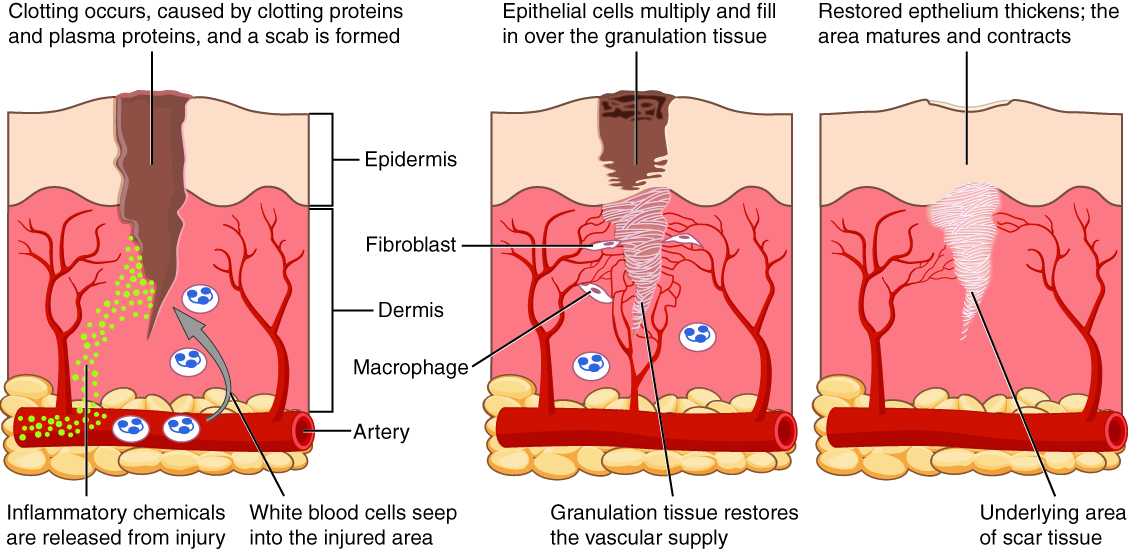
Wound healing involves overlapping phases:
- Stopping bleeding
- Managing inflammation
- Rebuilding tissue
- Remodeling the repaired area
Granulation tissue develops during the rebuilding phase, also called proliferation. Cells called fibroblasts produce collagen and other materials that create a framework for repair. At the same time, new blood vessels grow into the wound.
Skin cells then move across the developing wound surface. As healing progresses, the body reorganizes the repair tissue and strengthens the resulting scar. This remodeling takes longer than the initial closing of the wound. The wound healing process varies with the injury and the person’s health.
Why Is Granulation Tissue Important?
It Fills the Wound
An open wound may have a gap where tissue has been lost. Granulation tissue helps rebuild this space, providing a foundation for closure. This is particularly important when the wound edges cannot be brought together with stitches or other closure methods.
It Provides a Blood Supply
Repairing tissue requires oxygen and nutrients. Developing blood vessels help deliver these resources to the injured area.
It Supports New Skin
Granulation tissue creates a surface over which new skin cells can travel. Filling the wound and covering it with skin are connected steps, but seeing new tissue does not mean the wound has finished healing.
Can Too Much Granulation Tissue Cause Problems?
More tissue does not always mean better healing. Sometimes granulation tissue grows above the surrounding skin level. This is called hypergranulation, and it can interfere with skin cells moving across the wound.
Friction, excess moisture, and ongoing inflammation or infection can contribute. Treatment depends on the cause and should be guided by a healthcare professional.
Granulation tissue also differs from slough, which consists of nonliving tissue and debris and may look yellow, brown, or gray. The Royal Children’s Hospital wound assessment guidance explains these distinctions. Do not try to cut away tissue or treat an overgrowth yourself.
| Tissue | Typical appearance | Role in healing |
|---|---|---|
| Healthy granulation tissue | Moist, pink or red tissue with a bumpy surface. | Helps fill the wound and supports new skin growth. |
| Hypergranulation | Granulation tissue raised above the surrounding skin. | Excess growth can interfere with new skin moving across the wound. |
| Slough | Yellow, brown, or gray tissue and debris. | Contains nonliving material; its significance and care should be assessed by a healthcare professional. |
How Can You Support Wound Healing?
Follow the wound care plan your healthcare provider gives you. Useful steps include:
- Cleaning and dressing the wound as directed.
- Protecting the area from rubbing, picking, and repeated injury.
- Attending follow-up appointments.
- Discussing diabetes, circulation problems, smoking, or medications that could affect recovery.
Continue scheduled dressing changes, and ask your healthcare provider before switching dressing products or adding treatments. Different wounds need different moisture levels and protection.
Contact your healthcare provider promptly if you notice increasing redness or pain, pus, black tissue, fever, or a wound reopening. A wound that stops improving also needs assessment. MedlinePlus explains wound care and warning signs in more detail.
For more on delayed healing, explore reasons a wound may not heal on its own.
Where Does Far Infrared Therapy Fit Into Recovery?
Gladiator Therapeutics develops patented, non-powered far infrared (FIR) technology designed to support circulation, tissue repair, and the body’s natural healing processes. Our innovative SemiCera® technology is being explored for its potential to promote cellular regeneration and support wound recovery.
Because granulation tissue relies on healthy blood vessel development and cellular activity, circulation and tissue health are important parts of the healing process. Gladiator Therapeutics’ far infrared technology is designed to complement these natural processes and may offer additional support alongside appropriate wound care.
If you’re recovering from a wound, explore Gladiator Therapeutics’ far infrared therapy devices and learn how our technology may fit into your recovery plan. Consult your healthcare provider before incorporating a new device into your wound care routine. You can also review our frequently asked questions or learn more about Gladiator Therapeutics.